
Essay: The Platform at Udine
What an old man at a café in Udine, Italy taught me about grief, reinvention, and insistence on being alive.

At the foot of the Alps in northern Italy, the rail station at Udine wears its age without apology. Yellow plaster peels from the walls, surrendered to decades of weather and neglect. Iron beams streak and flake with rust. The overhead wires form long, braided cords of rusted wire, humming faintly. This is the architecture of departure.
The café where I wait to change trains smells of diesel, espresso, and sweltering humans. At least, in the months when it’s sweltering. Along the platform, signs warn against crossing the tracks. Instead, in English and Italian: Use the subway.The irony makes me grin. In New York or Boston, a subway is a train that travels, mostly, in sub-terrain. In America’s suburbs, it is a sandwich chain, staffed by ‘artists’ stacking fluorescent cheese on bread.
Here in Udine, the subway is neither. Sub is under. Way is path.
I’m reminded that words, like people, mean different things depending on where you meet them.
Inside the cafe sits an old character. A man in his eighties, though at first glance his aura makes him seem younger. His gray sport coat hangs loose, its fabric and his frame softened by years but still holding to their original forms. Both well constructed, both resisting decline. His hair is white, combed with intent. His movements are deliberate, animated. Italian.
He sits alone at a table just to my right, sipping from a small cup. And yet he does not remain alone for long. Whenever a woman, any woman, young or old, takes a table near him, he leans in with a word, a question, or a smile that obligates. His charm is gentle. Insistent without being intrusive. They linger, amused or flattered, drawn into his orbit. I notice he never attempts to engage with men. Only women. His method is precise, practiced, honed.
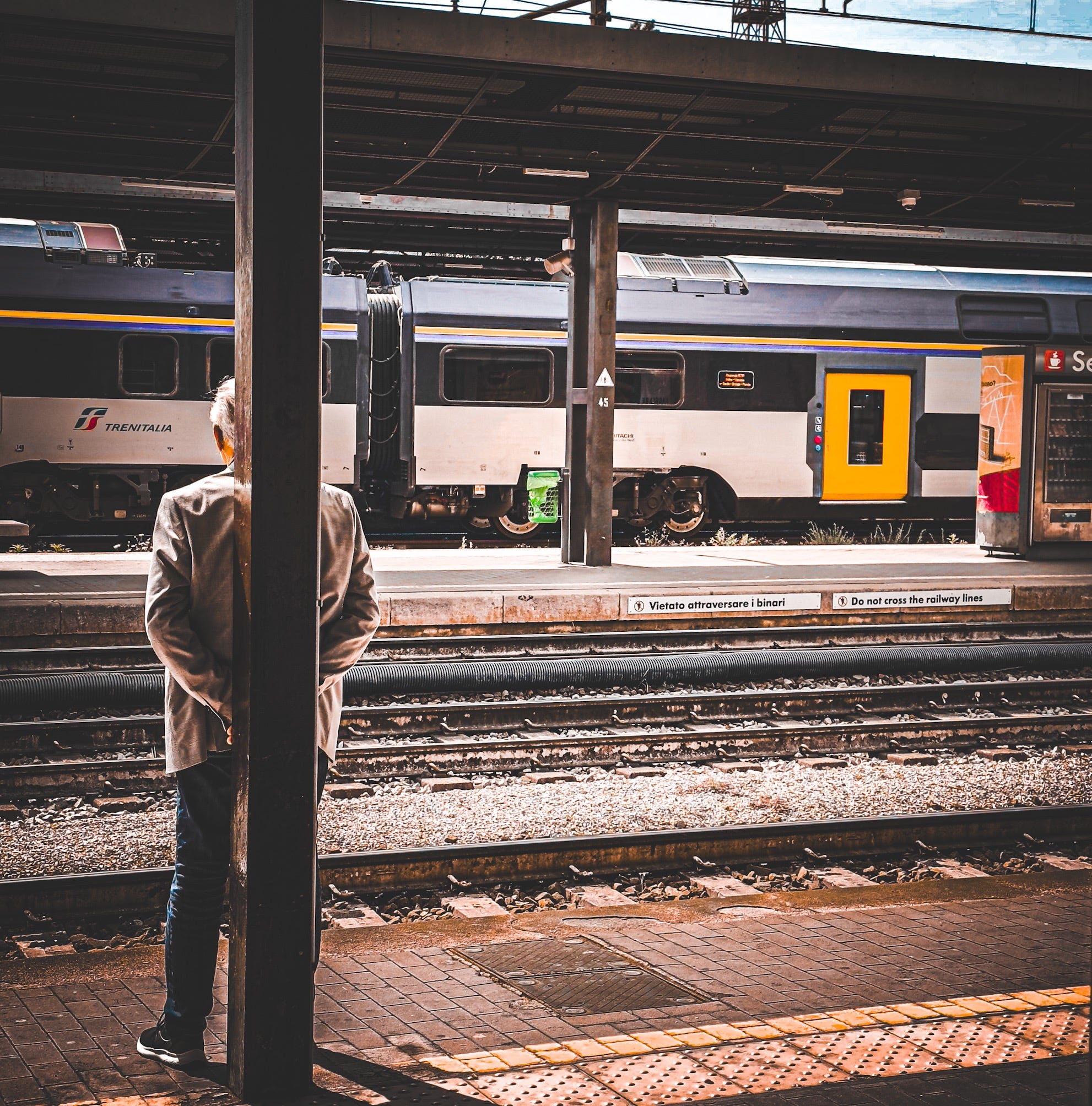
I imagine it began with loss. A wife who once carried half his sentences, who answered his questions before he had them aloud. A woman who knew which arm of his sport coat to hold when they crossed the street. Perhaps she died one winter, when the snow on the rooftops pressed too heavily against the beams of their home while he was away. Or perhaps she slipped away more slowly, her absence stretching across years until the silence became unbearable. When she departed, the conversations ended. The mornings became corridors of stillness and quiet. The evenings, longer, as he wrestled to complete what she managed with ease.
He could have retreated, as many do. Like the way my father did after my mom passed away.
Instead, this man fashioned something else: a ritual to stitch himself back into the fabric of a life he still owned. I wonder if this café at the rail station became his surrogate companion. Its endless stream of travelers a revolving cast to fill the silence she left behind.
He smiles, because to stop would allow the curtain of his emptiness to be pulled back. It would reveal, possibly, the empty kitchen of mornings without her, the parlor evenings stretched too thin. The echo of her voice replaced now by his own silence. Or worse, the sense that he is also sliding onto that descent, where the mountains north of Udine collapse into the flat Friulian plain, the land easing toward the Adriatic Sea.
He chooses this place because, however brief the interactions, the frequent transfers provide a steady supply of smiles and laughter. And they remind him of hers. He cannot recreate her presence. But he can simulate the texture and energy of being with someone who will engage.
And perhaps, in the way of late-life reinventions, this too has become more than coping. Perhaps it is not only substitution, but an emergence. Not a shadow of his loss, but a new form of living, even this late in the game. The ritual has given him a purpose, a rhythm. A chance each morning to be someone again. Loss did not claim him; it forced him to invent another way to be visible.
After a while he finally stands, stacking coins in the saucer with quiet precision. He makes his way toward the train platform. Slow but sure-footed. The train he boards is as worn as the café walls: paint chalked and fading, graffiti sprawled in bubbled blues and magentas, the signature of restless youth who drink and smoke and make love between the idle carriages in the middle of the night. Because what else is there to do here?
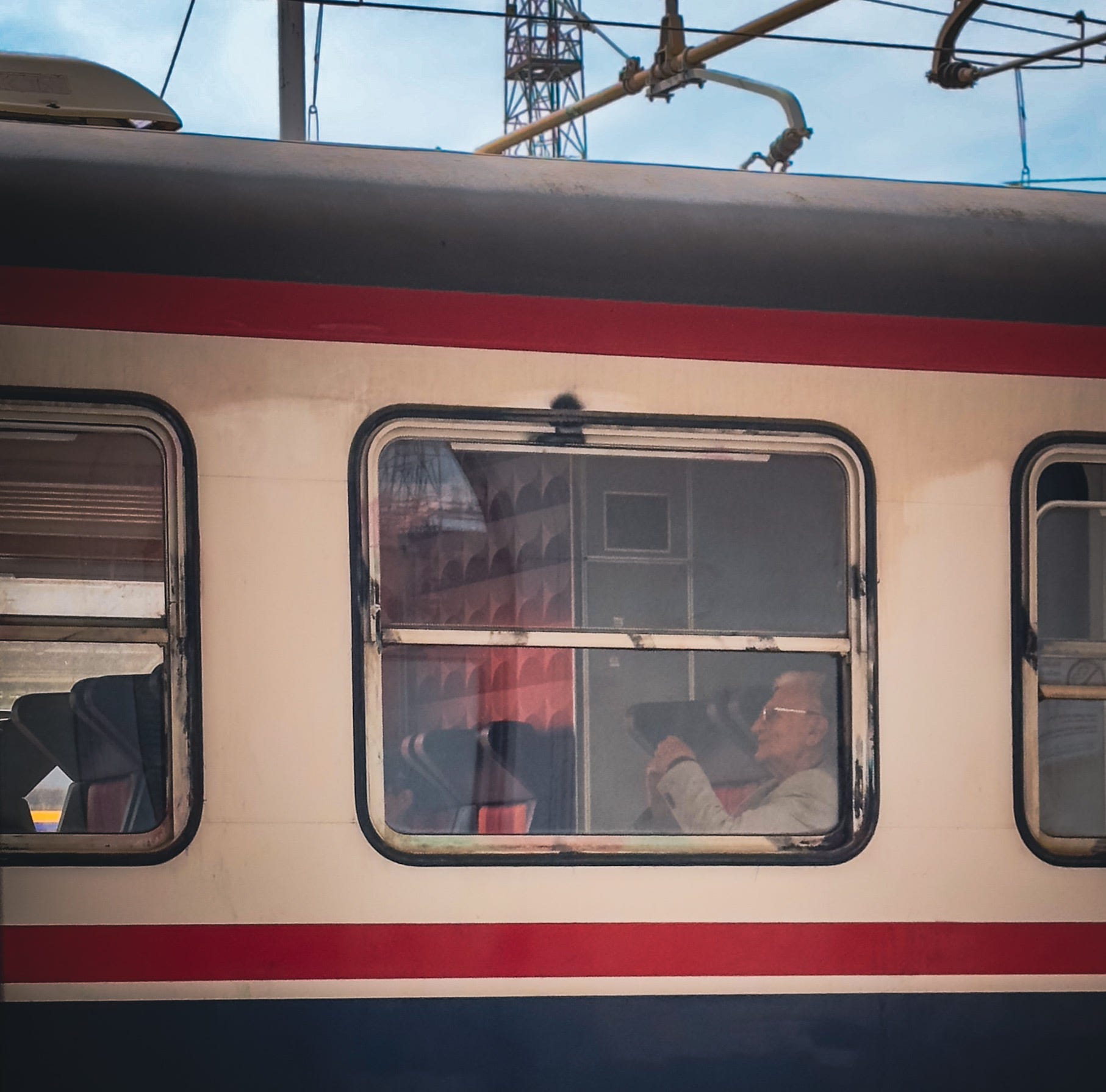
He ascends the stairs, boards, and claims a window seat. From the café I watch him settle, knowing it is almost time to catch my own train. His eyes fix outward, on the wires, the rusted beams, the tired scaffolds of time and departure.
A few minutes later, the train he occupies lurches forward. For a moment, his face is framed in glass. Held still while the platform slides away. He is not looking at me, nor at anyone in particular, but at the sum of what he has gathered: the café conversations, the faint echoes of laughter, the fragments of connection that make him feel alive.
As I tuck my pen into the notebook that helped me remember this scene, the train departs. In the rectangle of his window, now moving south toward Venice, I wonder: am I watching only him? Or is this also a reflection of myself? Perhaps I am already here with him, dealing with loss in my own measure. Rehearsing, on a smaller stage, the same invention he has mastered.
Like him, I must keep smiling. Keep talking. Keep moving. Keep insisting on being alive.
-23 September, 2025